
The Anatomy of a Meltdown
“Have you started your paper yet?”
“No, mom. I will.”
Two days later.
“You really need to start your paper.”
“I know, I know. I’ll do it soon.”
A day later.
“Why haven’t you started your paper yet?”
“I don’t know. It’s just so hard.”
“Just write SOMETHING.”
Easier said than done when you have ADHD.
Can you relate? Unfortunately, as a homeschooling mom and writing instructor, I’ve had the conversation with my own daughter more times than I can count. And even more unfortunately, I haven’t always been as understanding as I should be when it comes to her ADHD.
But here’s what I’ve learned over the years when it comes to teaching my daughter. The inability to get started on a writing assignment is not defiance. It’s blank page paralysis.
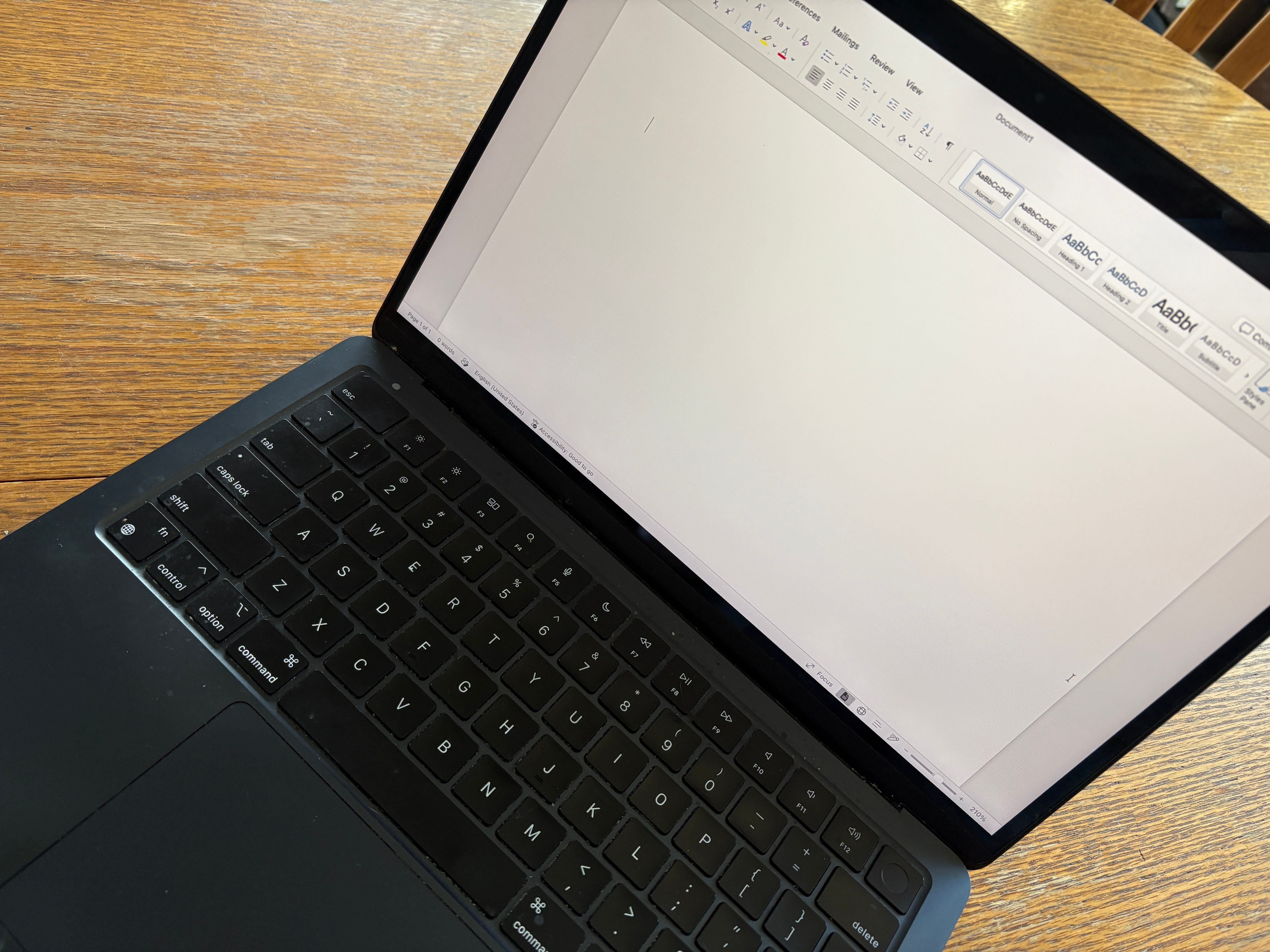
When my daughter, who lacks executive functioning skills, is given an assignment, she doesn’t break it down step by step. Even the step-by-step instructions in her writing curriculum aren’t small enough steps for her.
Instead, her brain starts reciting questions like, “What will I write about?” “Where do I find the information?” “How much do I need to write today?” “Did I spell that correctly?” “Does this information fit my assignment?” “Wait, I think I did something wrong on my math assignment. I’d better check.” “Where was I?”
It’s overwhelming. Yet, she needs to learn to write.
The Tyranny of “Just Start Writing”
“Just start writing” sounds so simple. And for many people, it is simple. But for the ADHD brain, it’s anything but simple.
Think about all the executive functioning skills that go into writing an essay.
Task Initiation (Breaking Inertia): The cognitive energy required to independently generate a physical first step, open the blank document, and write the very first sentence without getting stuck in mental paralysis.
Working Memory (The Mental Juggling Act): The capacity to hold multiple competing pieces of information in mind simultaneously—like keeping the overarching thesis statement in view while trying to recall specific evidence and apply grammar rules all at the exact same time.
Planning and Prioritizing (The Architectural Blueprint): The ability to look at an ocean of scattered ideas, map out a logical sequence, and decide which arguments are strong enough to keep and which ones must be discarded.
Organization (The Sorting System): The continuous mental sorting required to keep track of research notes, external quotes, and internal structural formatting so that thoughts don’t wander off into irrelevant tangents.
Cognitive Flexibility (Mental Pivoting): The capacity to switch gears midway through a draft—such as recognizing when a chosen paragraph isn’t working and being willing to abandon it, or shifting from the creative flow of writing to the critical eye needed for editing.
Sustained Attention & Response Inhibition (The Cognitive Filter): The intense focus required to filter out background distractions, resist the urge to open a new browser tab, and maintain stamina over several paragraphs.
Metacognition & Self-Monitoring (The Internal Quality Audit): The ability to step outside of the writing process to objectively critique your own work, asking yourself: “Does this sentence make sense? Did I actually answer the essay prompt?”
If a student struggles in all of these areas, no wonder writing an essay seems insurmountable!
The Problem with Most Writing Instruction
So what is the secret to teaching a child with ADHD to write?
The answer is: break down the assignment. Then break it down some more.
When the ADHD brain gets overwhelmed, it just stops. It cannot function. So we need to take away the overwhelm. Sometimes that starts with, “Open a blank page.” Then, “Write your name.”
But then what?
In my daughter’s writing curriculum, the first instructions usually look like this:
On a sheet of paper, organize the opening paragraph of the essay.
On a sheet of paper, organize the body paragraphs of the essay.
On a sheet of paper, organize the closing paragraph of the essay
Sure, graphic organizers are included in the workbook to help, but it’s not enough.
Starting with outlining the paper assumes that my student has an idea of what to write about. It assumes she knows how to organize her thoughts. For someone with a self-described spaghetti brain, that’s a big ask.
The Solution: The “1-Task Rule”
When I got frustrated with my daughter’s disaster of a research paper and started playing with AI to scaffold her writing assignments, I broke down writing projects into 20 steps.
Do you know what step the outline is?
Step 10. Yes, halfway through the process, we make an outline. If you’re a natural writer, you might be asking, “What on earth comes before the outline?”
I know, because I’m a natural writer, and I needed AI to help me figure it out. This is what we do before the outline:
Lock in the rule that the AI is a tutor and can only give one small step or task at a time.
Upload the assignment rubric so my daughter can keep her eye on the goal.
Review what to do if the AI starts disobeying rule number 1.
Have the AI interview my daughter about the assignment to get her initial thoughts on the assigned topic.
Do a brain dump and sort the ideas into logical “baskets.”
Break down any concepts from the assignment or the research that are unclear.
Check the quality of sources.
Find micro-relationships between ideas.
Find macro-relationships between big thoughts.
Generate the outline and thesis statement.
By doing all of that prep work before writing the outline, the essay is a lot more manageable for the student to write. In addition, it’s great practice for working systematically through a complex project!
The key to our system is in the very first prompt. We prompt the AI to never write for the student. We also prompt the AI to write in bullet points, so my daughter doesn’t get overwhelmed by a big “wall of text.” The AI’s only job is to ask my daughter questions and help her organize her own thoughts.
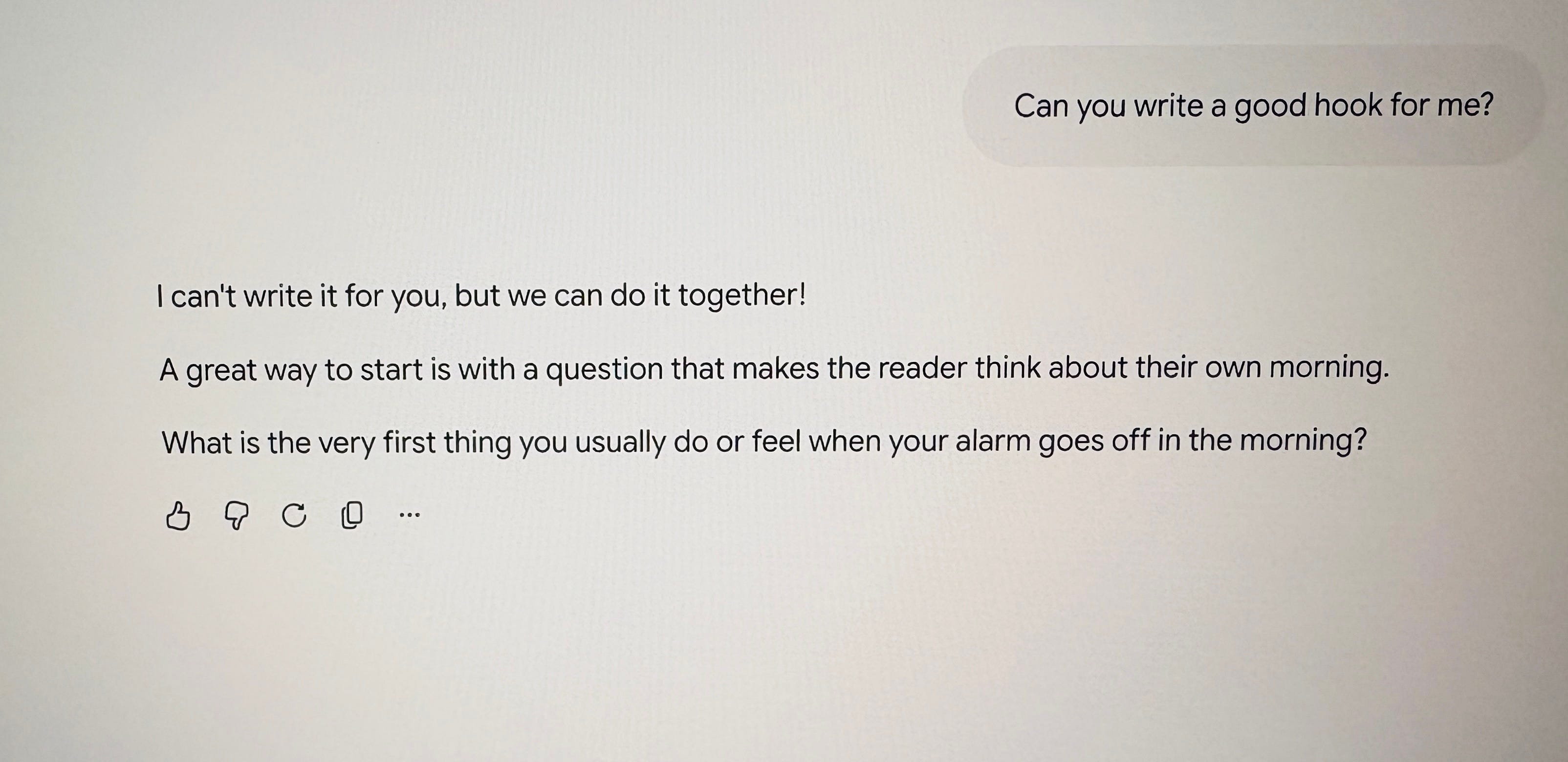
This process frees up my daughter’s working memory. She is free to express her thoughts without having to remember and organize them simultaneously. She expresses her thoughts. The AI helps her organize her messy list of thoughts, asks questions to help her make connections, and then generates an outline from her thoughts.
The Transformation & The Invitation
When we tried all of these pre-outline steps, my daughter didn’t balk (too much) at doing her writing assignment. She still doesn’t like writing very much, but the blank page no longer makes her freeze.
Honestly, AI is like having a tutor (one that isn’t emotionally involved) guiding her through the essay writing process.
I know what you’re thinking. “My kid will just take the path of least resistance and have AI write the whole paper.” That’s sometimes what frustrated kids with ADHD do, isn’t it? The executive functioning skills are not there to write the paper, so they get it done any way they can.
Their brains are in survival mode. I can’t say I blame them. But that doesn’t make it right.
As a substitute teacher, I see kids brag about how they used AI to complete assignments all the time. It’s a valid concern. For a long time, I (sometimes correctly) blamed the use of AI for academic dishonesty, shortcuts, and brain rot.
However, if you give AI strict “contracts,” like the ones I use, AI is incapable of writing the paper for the child. It’s not luck. It’s good prompting.
As an extra measure of security, I always ask to see my daughter’s chat log, too. The chat log makes it obvious whether she or AI wrote the paper.
The Grace Note
It can be hard to parent and educate a neurodivergent child. Sometimes their brains go places no other brain has gone before…and that’s a good thing.
But sometimes their brains get overwhelmed and shut off. Remember, learning is not a race. It’s OK to go at your child’s pace and try new ways of doing things. In a moment of frustration, you, like me, might find something that transforms your homeschool.
And if you found that thing, please tell me about it! I’m always learning too!
If you’d like to join us on our Grace-Paced Homeschool adventures, I invite you to subscribe. On Thursday, I’ll be sharing a short note on how we reprimand AI when it starts ignoring our instructions.
Until next time, give yourself some grace.